Further Obversations on the Diagnosis of Stygivenator molnari
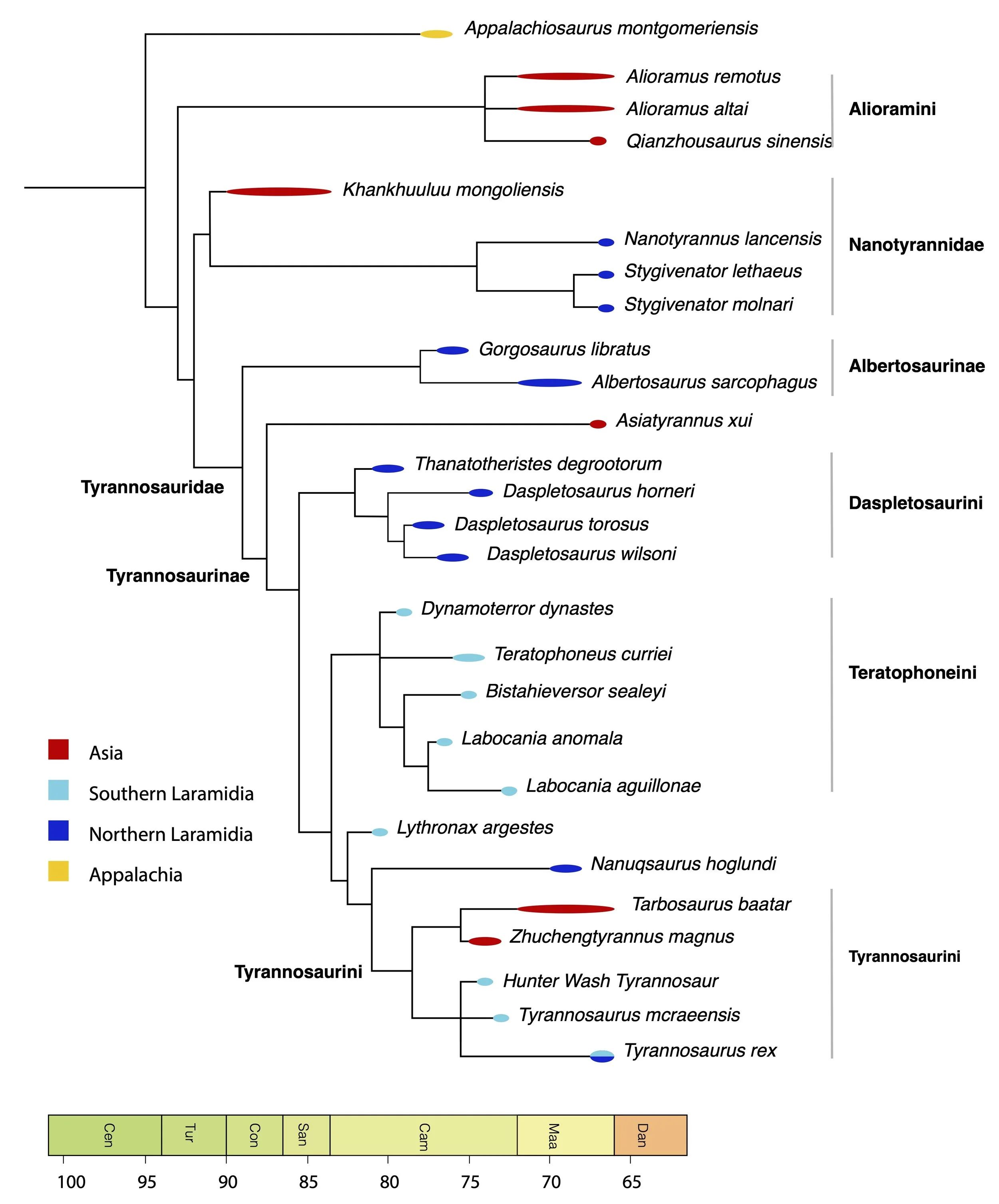
In a recent paper my colleagues and I presented a new phylogenetic analysis of the Tyrannosauridae, for the first time including a diversity of Nanotyrannidae. Stygivenator molnari is shown as closely related to Stygivenator (“Nanotyrannus”) lethaeus, with Nanotyrannus lancensis a distant relative.
This wasn’t the main focus of the paper and had to be added in relatively late since the Nanotyrannus paper wasn’t published until our paper was already in review. I wanted to devote a little more time here to the features supporting recognition of Stygivenator molnari as distinct from Nanotyrannus lancensis, focusing on the well-preserved Dueling Dinosaurs skull, showing
(1) why this animal is not a Nanotyrannus lancensis and
(2) why it can be referred to Stygivenator molnari.
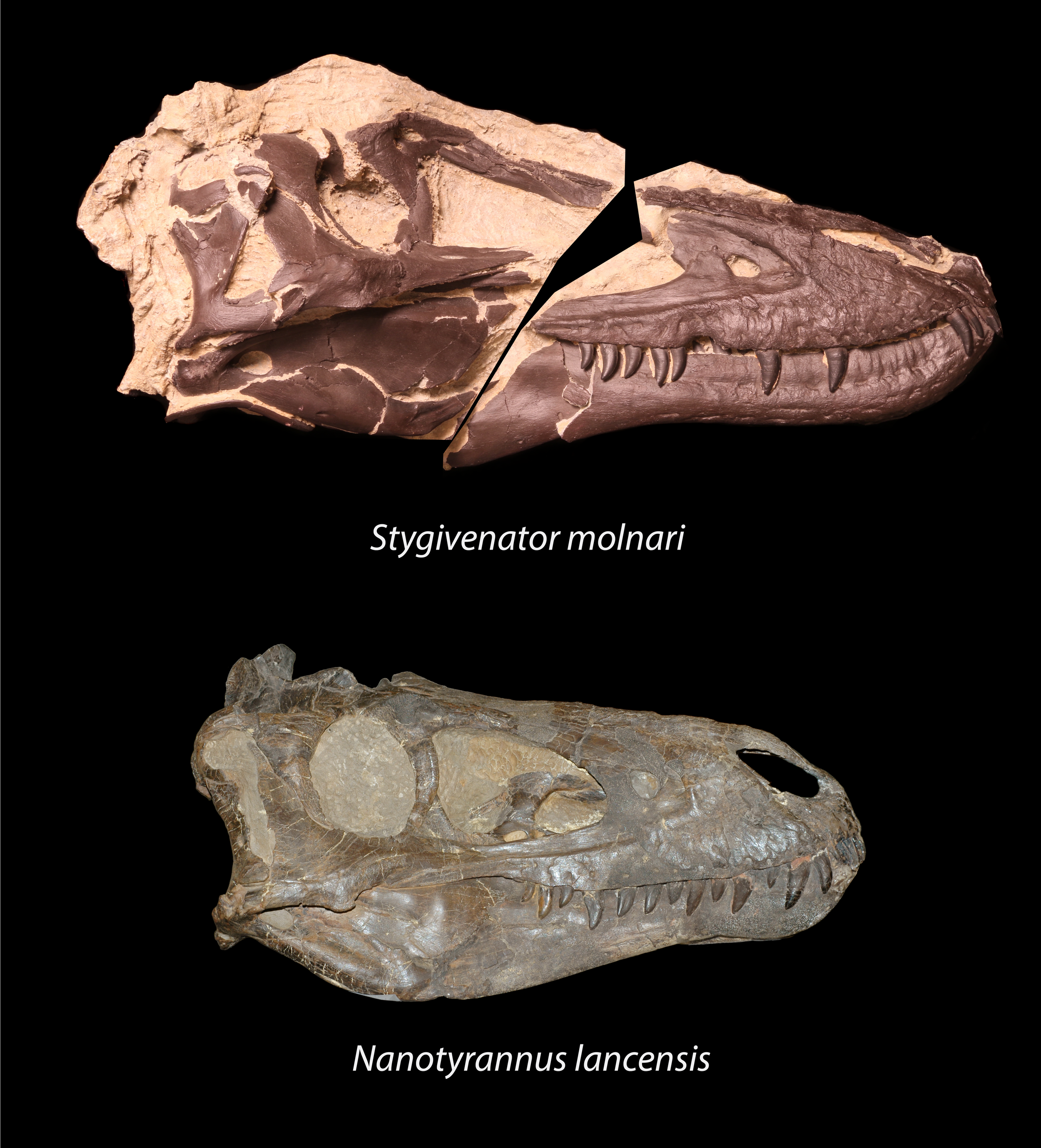
Fairly obviously, these skulls are shaped differently.
The Dueling Dinosaurs has an extremely long and slender skull. There is some crushing— the back of the skull in Nanotyrannus has undergone some crushing and likewise the back of the skull in the Dueling Dinosaurs is crushed: the rostrum and the back of the skull won’t go together. However the rostrum in both animals appears to be well preserved (reports of extensive reconstruction of the snout in N. lancensis appear to be greatly exaggerated).
These are not subtle differences; I’ve never seen this kind of variation in a dinosaur species. Tyrannosaurus rex (which may well represent two species) doesn’t show anything like this extraordinary variation in snout and skull proportions. Differences between species tend to be subtle, if you can tell two things apart at a glance, they’re probably different.
Anyway, on to the details.
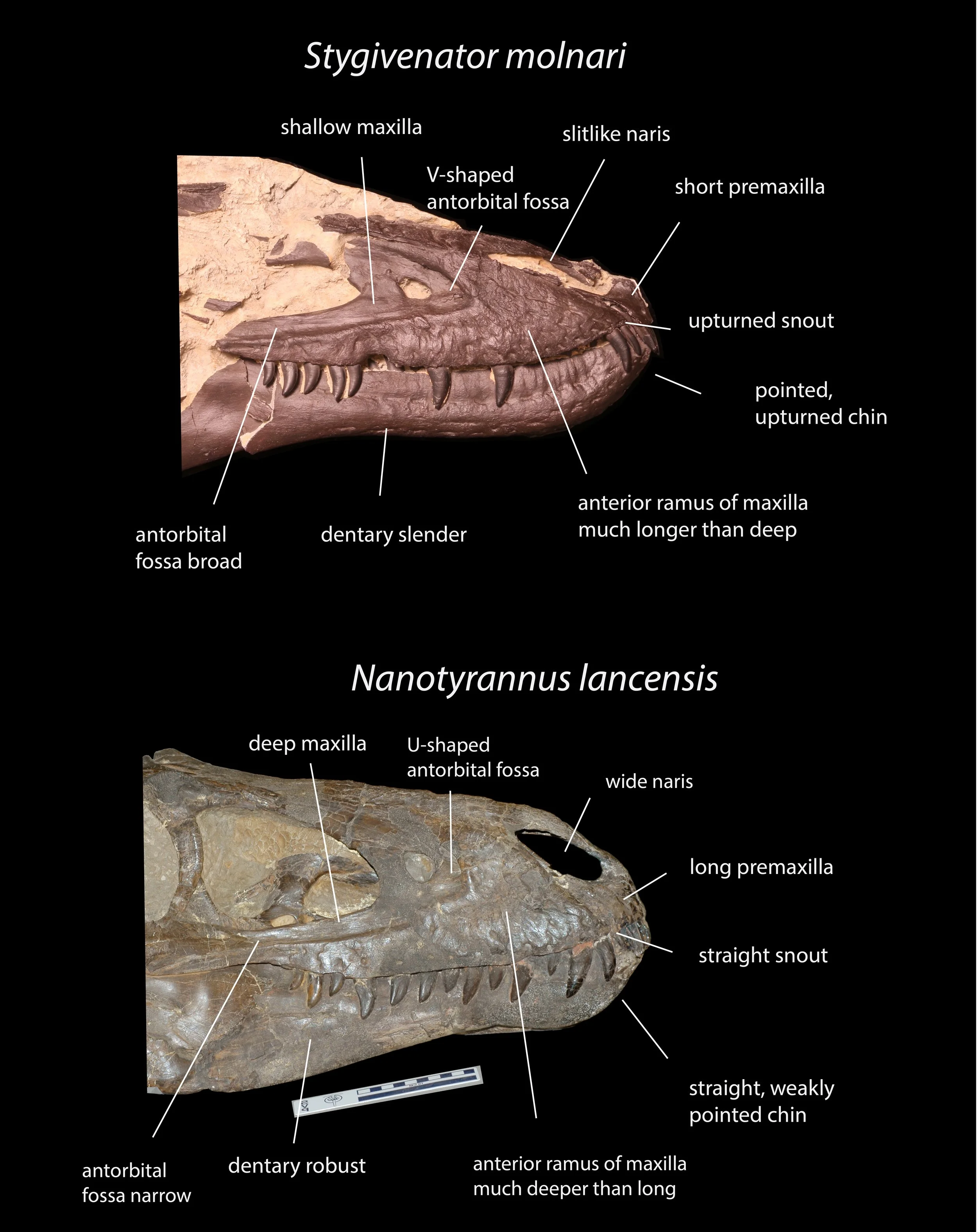
I do not find extensive character descriptions helpful: far easier to just study the shapes of the bones, anatomy is easier visually than orally in terms of processing the information. Show, don’t tell.
So I’m not going to spend pages describing these characters, just point them out, here and in the photos.
Here are nine differences between the Dueling Dinosaurs involving the shape of the nasals, premaxillae, maxillae, and dentaries:
Maxilla shallow vs. maxilla deep;
Narrow, V-shaped antorbital fossa anterior margin vs. broad, U-shaped margin;
Slitlike naris vs. broad naris;
Short premaxilla vs. long premaxilla;
upturned snout vs. straight snout
upturned, pointed chin vs. straight chin with deep symphysis;
anterior ramus of maxilla longer than tall, vs. taller than long;
dentary robust vs. dentary slender
antorbital fossa broad ventrally vs. narrow ventrally
Now, on to the back of the skull:
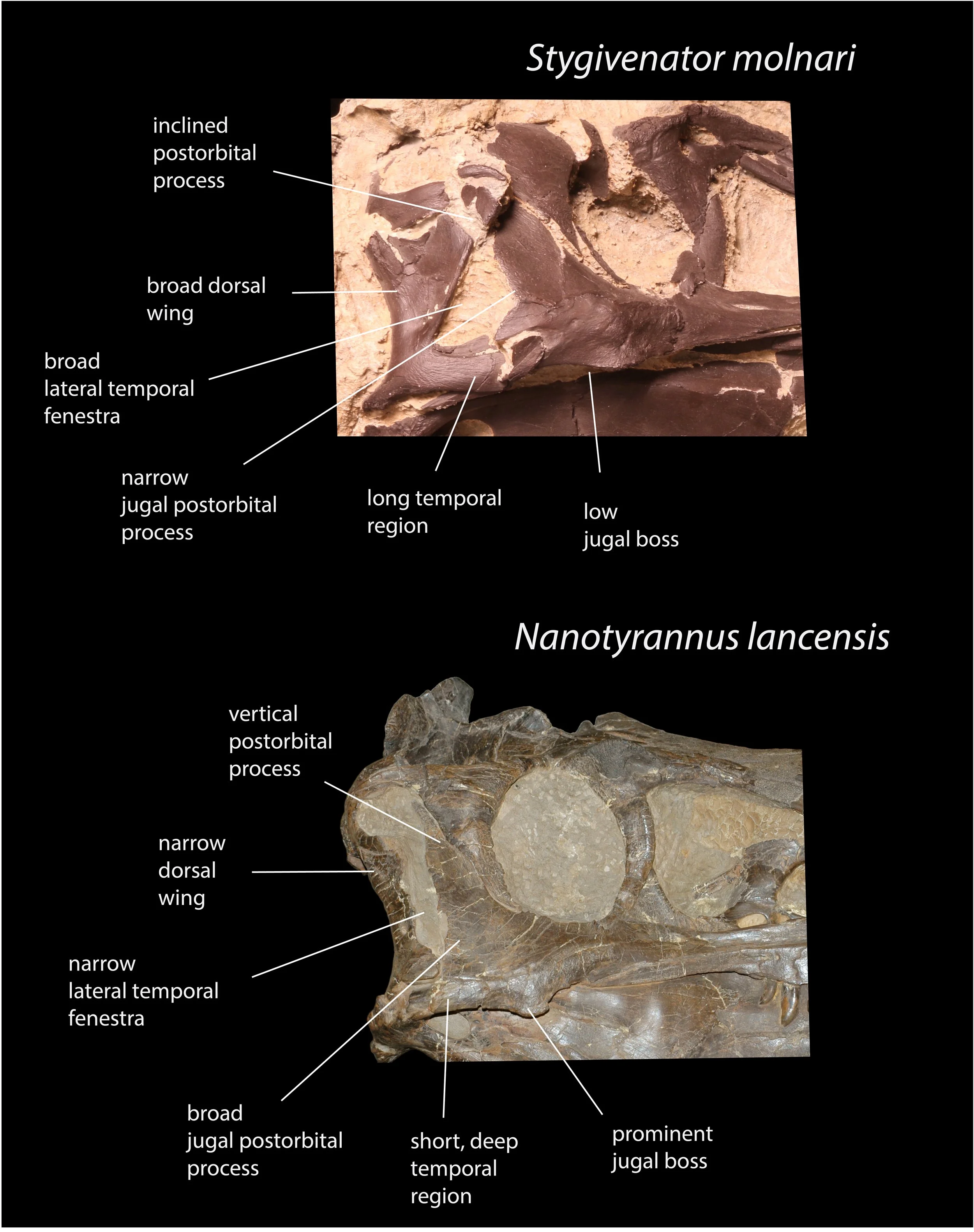
Another six characters differentiate the two.
postorbital process inclined vs. vertical;
broad dorsal wing of quadrate vs. narrow dorsal wing;
broad lateral temporal fenestra vs. narrow
narrow jugal postorbital process base vs. very wide base
temporal region long and low vs. very short and deep
jugal boss weakly developed vs. prominent
For a total of 15 characters.
I concede preservation is an issue and must be taken into account, and these characters need further study… but it seems highly unlikely that crushing can be the cause of all fifteen of these differences.
These are very, very different animals even accounting for preservation. And yes this is a very preliminary study of the problem… but its also a very preliminary study of the problem. If in a few minutes one can find so many differences, how many differences would a detailed, in-depth study of the anatomy reveal?
I suspect if one were to reconstruct both skulls in detail and do a detailed study of their anatomy, one would find even more differences than this admittedly rather cursory study has revealed.
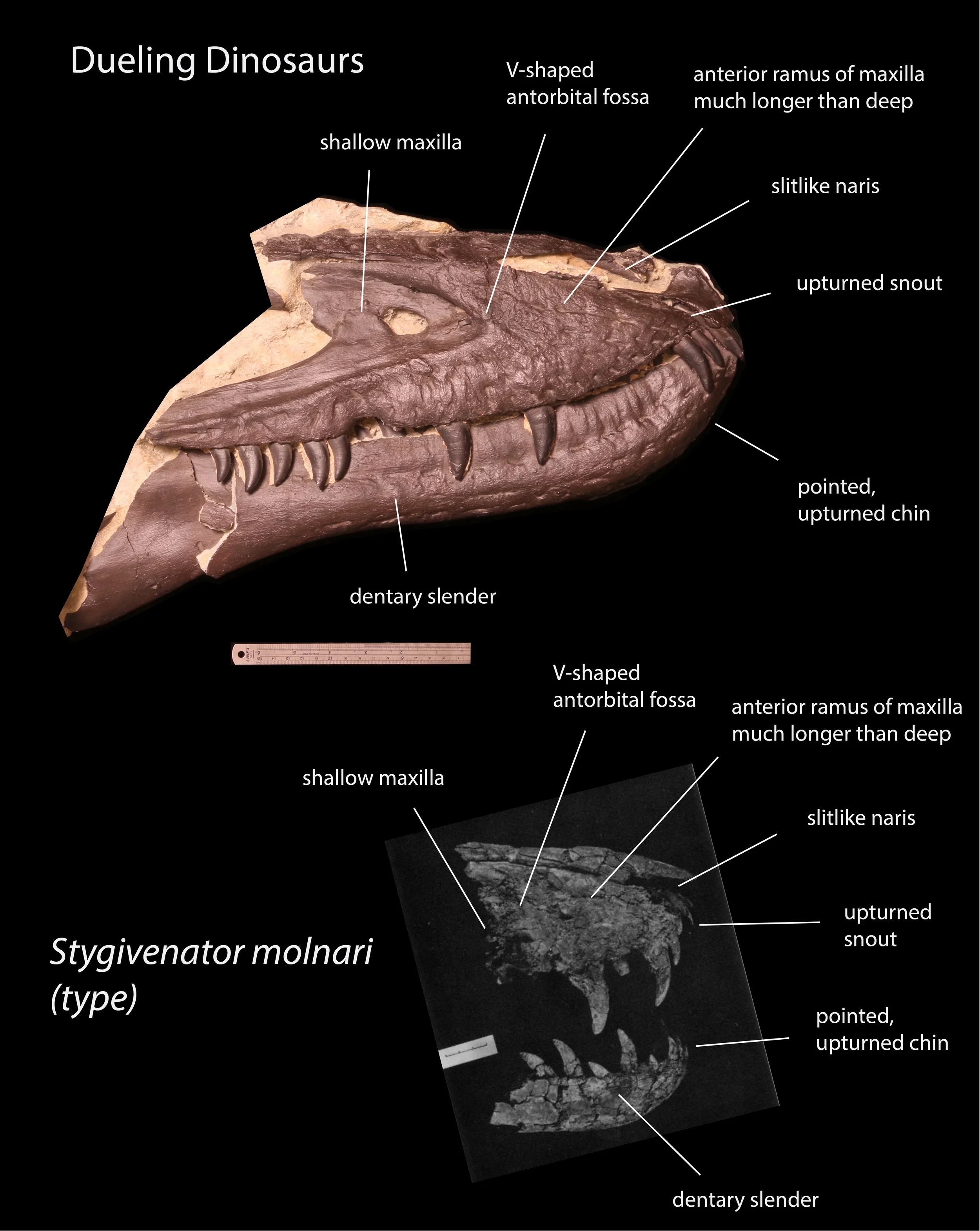
Finally, here’s the holotype of Stygivenator. It’s not highly complete or beautifully preserved, but it includes the anterior ends of the maxillae, nasals, dentaries, and the frontals: this is as complete or more complete than many tyrannosaurids, e.g. Thanatotheristes or Nanuqsaurus or Zhuchengtyrannus, which are considered valid species. The “it’s too incomplete to be diagnostic” argument just doesn’t fly. Tyrannosaurs have often been named on less. The holotype isn’t as complete as we’d like, but much of paleontology is founded on similarly incomplete specimens.
Moreover, of the 15 characters that separate the Dueling Dinosaurs from Nanotyrannus lancensis, 7 can be observed in the Stygivenator holotype. This seems a strong basis for referring Dueling Dinosaurs to Stygivenator.
The Dueling Dinosaurs isn’t just slightly different: it’s an extreme outlier from all other North American nanotyrannosaurs (with the exception of the Stygivenator holotype) and these differences are at least as large as the differences between, say, Tyrannosaurus and Tarbosaurus, two animals that are probably separated by around 10 million years of evolution.
It does seem to form a clade with Nanotyrannus lancensis so whether we want to retain it in Nanotyrannus or not is a bit arbitrary. Personally, I think Stygivenator is a fine name but it could just as well be Nanotyrannus molnari.
Referral of Dueling Dinosaurs to N. lancensis is Not Well-supported by the Evidence
The paper arguing for referral of the Dueling Dinosaurs to Nanotyrannus (Zanno and Napoli, 2025) provides a long diagnosis of “N. lancensis.”
Eutyrannosaurian apomorphically referable to Nanotyrannus, with the following characters (Figs 1–2, Extended Data 1–3): rostrocaudally short maxillary fenestra, rostral palatine recess forms discrete pneumatic sinus extending rostrally into maxillary process of palatine*25; mesialmost two dentary teeth reduced; two or more pleurocoels on axial centrum set within fossa; poorly crenulated axial neural spine; infraprezygapophyseal pneumatic recesses on proximal caudal vertebrae; bulbous supraradiocondylar ridge on humerus*; pronounced, craniomedially projecting entepicondyle on humerus; pubic boot with straight craniodorsal, caudodorsal, and ventral margins*.
The problem is that almost all of these characters are either not preserved in the holotype of lancensis (maxillary fenestra short), seem to be more broadly distributed (mesialmost two dentary teeth reduced), or simply aren’t preserved in the holotype, since they refer to the vertebrae, humerus, pubis, etc. and only the skull is known from the holotype.
The diagnosis therefore doesn’t describe Nanotyrannus lancensis: it’s based on the Dueling Dinosaurs.
The paper starts with the assumption that the Dueling Dinosaurs is Nanotyrannus lancensis and proceeds accordingly: the referral is assumed, never tested.
In practice, the referral of the Dueling Dinosaurs to Nanotyrannus appears to come down to a single character shared by the type and the Dueling Dinosaurs:
“In contrast NCSM 40000 compares favorably with CMNH 7541; notably, both share the apomorphic presence of a rostral palatine pneumatic chamber (that differs from the shallow recess of N. lethaeus and all other eutyrannosaurians), permitting referral of the former to N. lancensis.”
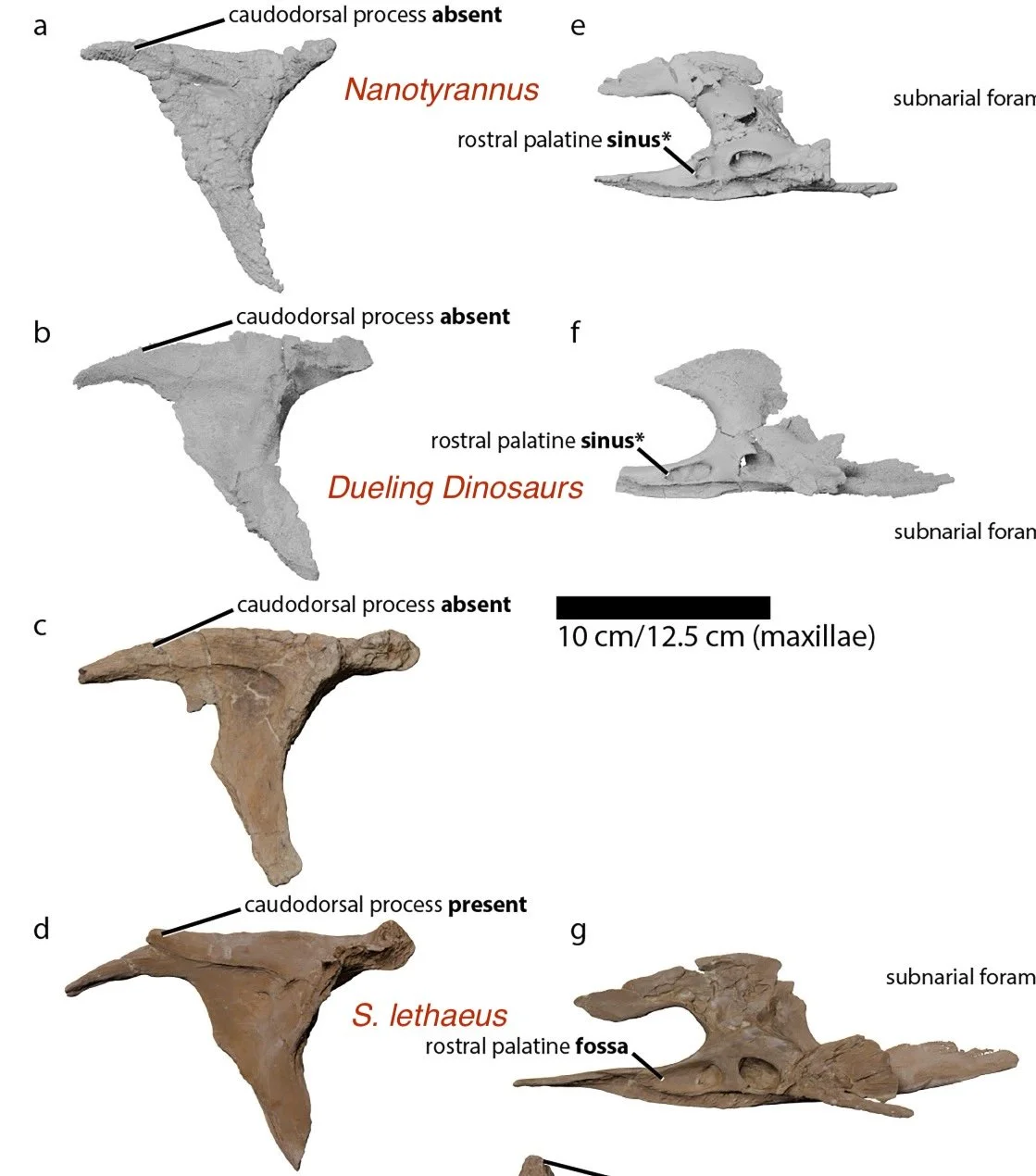
This single character is, I would argue, a tenous basis for referring the Dueling Dinosaurs to N. lancensis.
Pneumatic characters are highly homoplastic, show high levels of individual variation, and pneumatic features may also vary ontogenetically, as pneumaticity tends to become more well-developed as animals mature (note that the holotype of lethaeus is a young adult, but not fully mature, whereas both the Dueling Dinosaurs and the Nanotyrannus holotype are fully mature). Nor is the difference between the ‘sinus’ and the ‘fossa’ well-illustrated.
If anything, on the basis of the palatine morphology one might just as easily argue that Dueling Dinosaurs differs from N. lancensis (and resembles lethaeus) in having a greatly enlarged pneumatic excavation of the palatine; and the shapes of the palatines in the two animals are fairly different, adding one or two more characters to the already long list of characters differentiating them.
Could all this be individual variation…. well, I doubt it. But if so, why couldn’t the “rostral palatine pneumatic chamber” be individual variation? How do we know it’s that single character that’s reliable, and all the others are noise? I don’t think all characters are equally informative, but in general I trust 15 characters supporting an assignment over 1 character.
If It Looks Like a Duck
If it looks like a duck, walks like a duck, and quacks like a duck, it’s probably a duck.

But logic works the other way: if it doesn’t quite look like a duck, doesn’t walk like a duck, and doesn’t quack like a duck, then perhaps it’s something else- a goose, a swan, a screamer, an ostrich.
If you have to do a lot of special pleading to make the evidence fit an hypothesis, perhaps that hypothesis is wrong? Its possible to overthink things. Sometimes the obvious: and these animals are pretty obviously different at a glance- is the correct hypothesis. At the very least, we should start with the obvious hypothesis (if it looks like a duck it’s a duck, if it doesn’t, it’s not a duck) and consider that hypothesis carefully, before moving on to a less-obvious hypothesis.
In short, there are lots of very obvious differences between the Dueling Dinosaurs tyrannosaur and Nanotyrannus lancensis (it does not look, walk, or quack like a duck) and a lot of very obvious similarities with the Stygivenator holotype (it looks, walks, and quacks like a duck)… so it’s probably a Stygivenator molnari.
References
Bakker, R., Williams, M., Currie, P.J., 1988. Nanotyrannus, a new genus of pygmy tyrannosaur, from the latest Cretaceous of Montana. Hunteria 1, 1-30.
Larson, P., 2013. The case for Nanotyrannus, In: Parrish, J.M., Molnar, R.E., Currie, P.J., Koppelhus, E.B. (Eds.), Tyrannosaurid paleobiology. Indiana University Press, Bloomington, Indiana, pp. 15-53.
Longrich, N.R., Dalman, S., Lucas, S.G., Fiorillo, A.R., 2026. A large tyrannosaurid from the Late Cretaceous (Campanian) of North America. Scientific reports 16, 8371.
Longrich, N.R., Saitta, E.T., 2024. Taxonomic status of Nanotyrannus lancensis (Dinosauria: Tyrannosauroidea)—a distinct taxon of small-bodied tyrannosaur. Fossil Studies 2, 1-65.
Zanno, L.E., Napoli, J.G., 2025. Nanotyrannus and Tyrannosaurus coexisted at the close of the Cretaceous. Nature, 1-3.