Were Caenagnathid Theropods Fruit-Eaters? Probably not.
Why the hypothesis of frugivory in dinosaurs goes beyond the available fossil evidence… and why it just might work for certain Cretaceous creatures.

Leptorhynchos gaddisi, from the Campanian-aged Aguja Formation of West Texas.
Caenagnathids were a group of small-to medium sized, birdlike dinosaurs that lived at the end of the Cretaceous, alongside animals like T. rex and Triceratops.. They had odd, parrot-like or turtle-like beaks, elongate necks, hands with spidery fingers, and oddly elongate toes. Exactly what they’re doing, we don’t know. There’s nothing quite like them alive today; ironically the organisms they arguably resemble most closely, the dicynodont therapsids, lived in the Permian and Triassic, so we’re stuck comparing the anatomy of one extinct group with another to understand function- which is less than helpful.
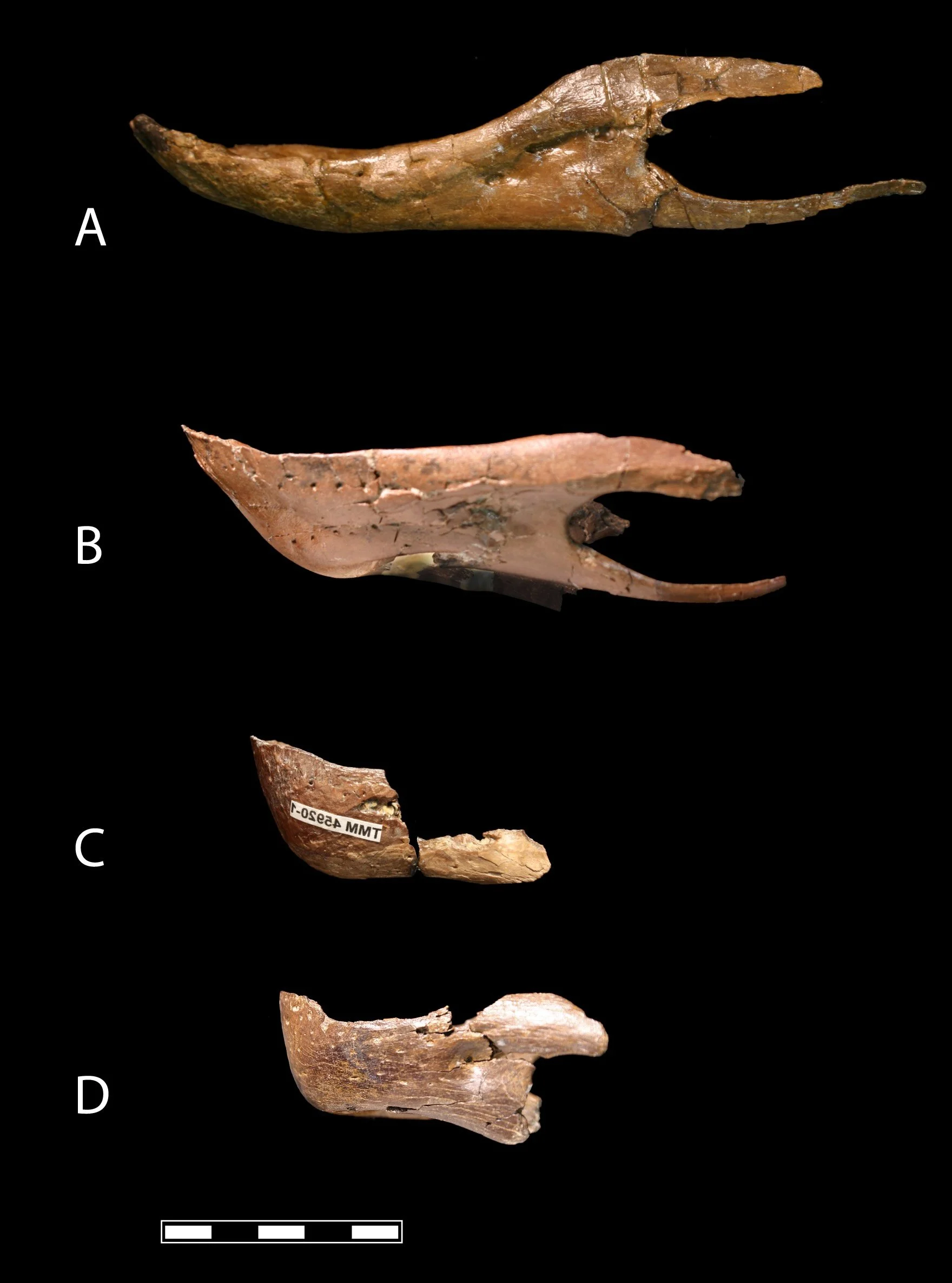
Caenagnathid lower jaws. top to bottom: Caenagnathus collinsi, Chirostenotes pregracilis, Leptorhynchos gaddisi, Citipes elegans.
Caenagnathids are moderately common in the Late Cretaceous of Laramidia— the Western North American landmass— but most of what we know of them is unfortunately pretty fragmentary. They have been named off of jaws (Caenagnathus, Leptorhynchos), hands (Chirostenotes, Hagryphus), partial skeletons (Epichirostenotes), feet. It’s only relatively recently we’ve found more complete remains of these strange animals with good cranial and postcranial material associated (Anzu), and what we’ve found if anything makes them weird, more mysterious.
So what were these dinosaurs doing?
Recently, a new caenagnathid theropod. Infernogallus, was described from the late Maastrichtian of the Hell Creek Formation.

Infernogallus.
The skull is the most complete known for a caenagnathid. The paper argues it’s a fruit eater.
But was it?
I’d argue that if you take a look at all the evidence, that the frugivory hypothesis doesn’t do a very good job of explaining what we know about caenagnathids. Caenagnathids, whatever they were doing, probably weren’t primarily frugivorous. Why not?
They are too big to be frugivores,
They can’t fly or climb well enough to get to the fruit,
Many of the paleoenvironments where they lived seem to have lacked the diversity of flowering plants needed to support fruit-eaters
Many species lived in highly seasonal environments where frugivory is unlikely.
The anatomy of the skull doesn’t fit the proposed model (frugivorous parrots) particularly well, and instead fits herbivores (herbivorous ducks, tortoises, dicynodonts, or other oviraptorosaurs) far better.
Size
The first and most obvious reason to be skeptical of a frugivorous diet is body size. Most frugivores are small. Caenagnathids are big. Some were very big.
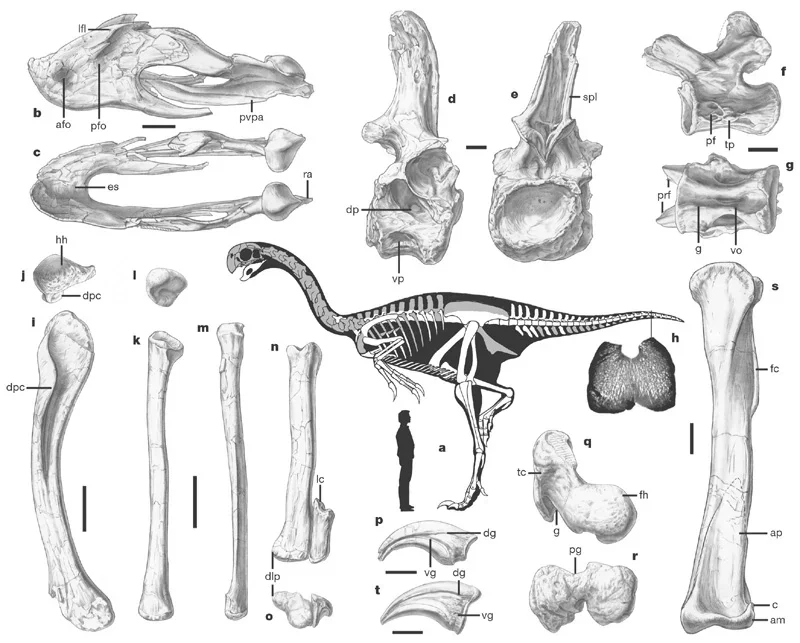
The giant caenagnathid Gigantoraptor
Now, it might seem trivially obvious to say that caenagnathids are bigger than frugivorous birds, and it is. But it’s also very important. Because size dictates a lot about biology.
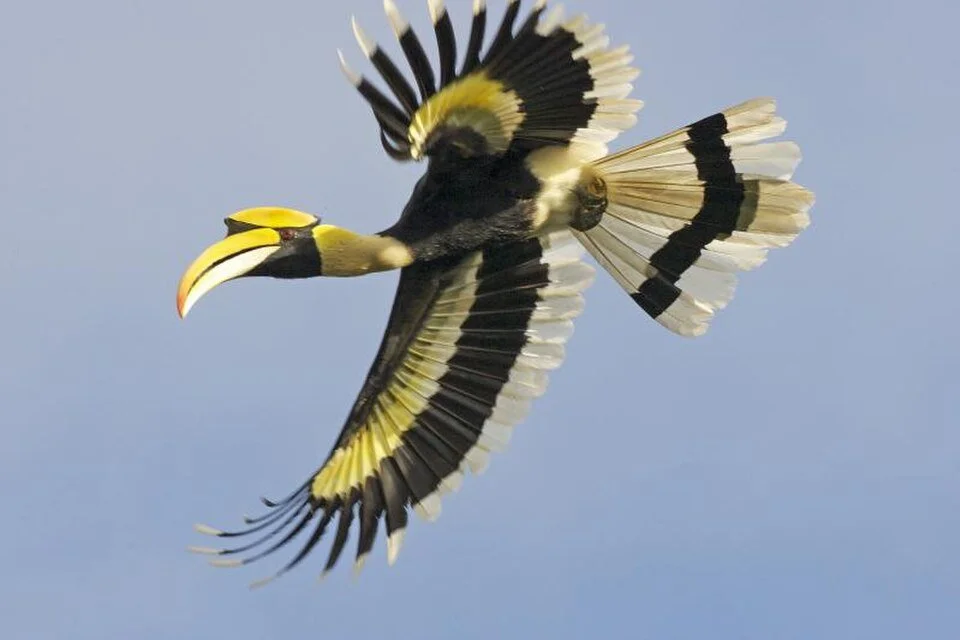
Most fruit-eating birds are small. A large toucan like the Toco toucan is about 500-900 grams; the smallest toucan, the lettered aracari, is about 130 grams. Hornbills get larger, the helmeted hornbill being around 3 kilograms. The cedar waxwing weigh 30 grams. The frugivorous Dracula Parrot, Psittrichas fulgidus (cited in the paper as a model for Infernogallus) is about 700 grams, about a pound and a half, less than 10% the weight of Infernogallus and less than 1% the weight of a large caenagnathid like Caenagnathus.
Fruit-eating birds are rarely very large. The exception is the cassowary, found in a relatively small area of tropical and subtropical forest in New Guinea and northeast Australia. Cassowaries get big, up to around 100 kg. The dodo, weighing about 10 kg, is also reported to have eaten a lot of fruit, but being extinct, it’s hard to be certain what it was doing.

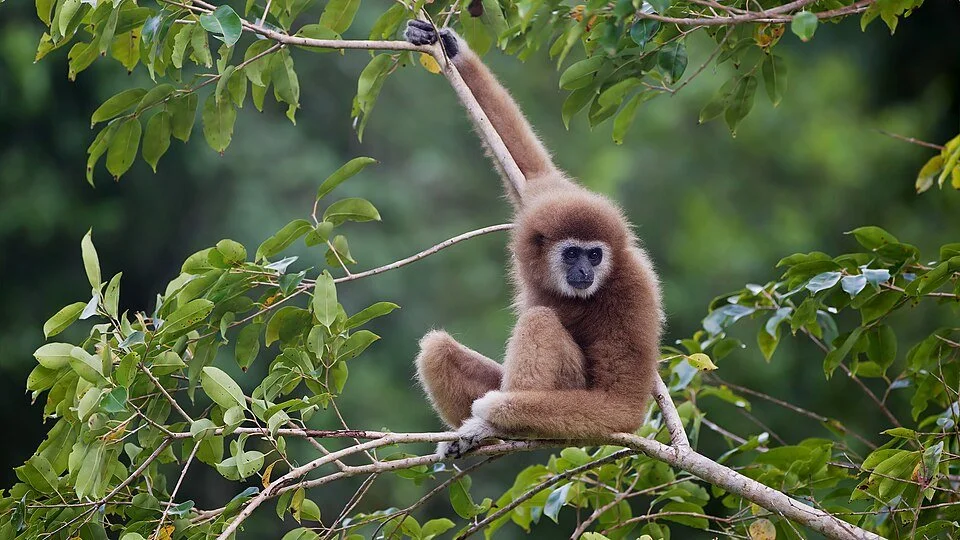
Among mammals, the the Giant Golden-Crowned Fruit Bat, one of the largest bats, only gets to about 1.5 kg. Neotropical fruit bats, Artibeus, weigh up to 80 grams. Frugivorous primates get larger. Spider-monkeys weight around 10 kg, gibbons weigh anywhere from 5 kg up to about 12 kg. Pacas are about 10 kg. Chimpanzees, which mostly eat fruit, weigh about 50 kg, and a big orangutang can be 100 kg.
So caenagnathids do overlap with frugivores, at the small end. Infernogallus weighed about 12 kg, which is small for a dinosaur, but that’s larger than almost all frugivores except chimps and orangutangs. And they go up from there. Chirostenotes weighed maybe 50 kg, Eoneophron, 80 kg; Caenagnathus about 100 kg. The biggest caenagnathid known from North America, Anzu, weighed maybe 200-300 kg- several times the size of the largest known frugivores.
Moreover where these uncommon large frugivores like chimps, cassowaries, and orangutangs do exist, they inhabit dense tropical and subtropical forest with lots of large fruit- central Africa, Southeast Asia, Australia. Few if any Late Cretaceous floras would seem capable of supporting large frugivores of the sort seen in modern ecosystems— let alone multiple species simultaneously (see below). Yes, big frugivores can exist- but only in unusual circumstances, dictated, obviously, by the available fruit.
Meanwhile, the largest known caenagnathid, Gigantoraptor, had a body mass of around 1.5 tonnes. Despite its enormous size, its jaw anatomy was largely the same as that of its smaller cousins. It has that same specialized jaw joint, they were processing food in a broadly similar way. That jaw joint presumably didn’t evolve to allow a 1500 kg animal to eat piles of giant fruit.
Whatever it was that caenagnathids were doing, it seems to have been an ecological niche that worked well both at small size, and large size- spanning more than two orders of magnitude. Herbivory is the most obvious one.
Does this make it impossible that caenagnathids were frugivores? No.
But it does make it less likely.
Large frugivores do exist, but they are rare, and they exist only in certain times and places- tropical forests in the Amazon, central Africa, Southeast Asia, New Guinea and Australia. Large animals- 10 kg and larger- are rarely fruit eaters.
2. Locomotion
Another thing most frugivorous birds and mammals have in common is that most frugivores are arboreal. That’s because most of the fruit is in the trees. Frugivorous birds like toucans and hornbills, as well as Artibeus fruit bats and flying foxes are able to fly to access trees, obviously.
Gibbons, chimps, and orangutangs can climb. There are relatively few terrestrial frugivores- the cassowary is one. Pacas are another. Maned wolf are sometimes called frugivores, but they’re more omnivores that eat a huge amount of fruit- they eat a lot of small animals and maybe about 40% of their diet is a wild tomato, the “wolf apple”, Solanum lycocarpum. Dodos may have been another terrestrial frugivore.
A few terrestrial frugivores exist but there are hundreds of species of arboreal toucans, hornbills, quetzals, fruit bats, and fruit-eating monkeys. They outnumber the terrestrial forms more than ten-to-one.
Why is this? Famously, a journalist once asked a bank robber was once asked why he robbed banks. He answered, because that’s where the money is.
Why do fruit eaters go into the trees? Because that’s where the fruit is.
Yes you can just wait for fruit to ripen fall. But there’s dramatically less fruit available for a terrestrial fruit-eater than an arboreal one. You’re getting anything the arboreal frugivores didn’t get to first. That’s why monkeys climb trees after all, they get the bananas before the animals on the ground.

Again, being terrestrial doesn’t preclude frugivory- but it’s the exception. While it’s not decisive, the fact that caenagnathids are terrestrial is another piece of evidence that makes frugivory less likely.
Could caenagnathids have climbed? I think they were probably better-adapted to climbing that most theropods- they have incredibly long toes, which look practically prehensile; they had strongly curved toe claws.
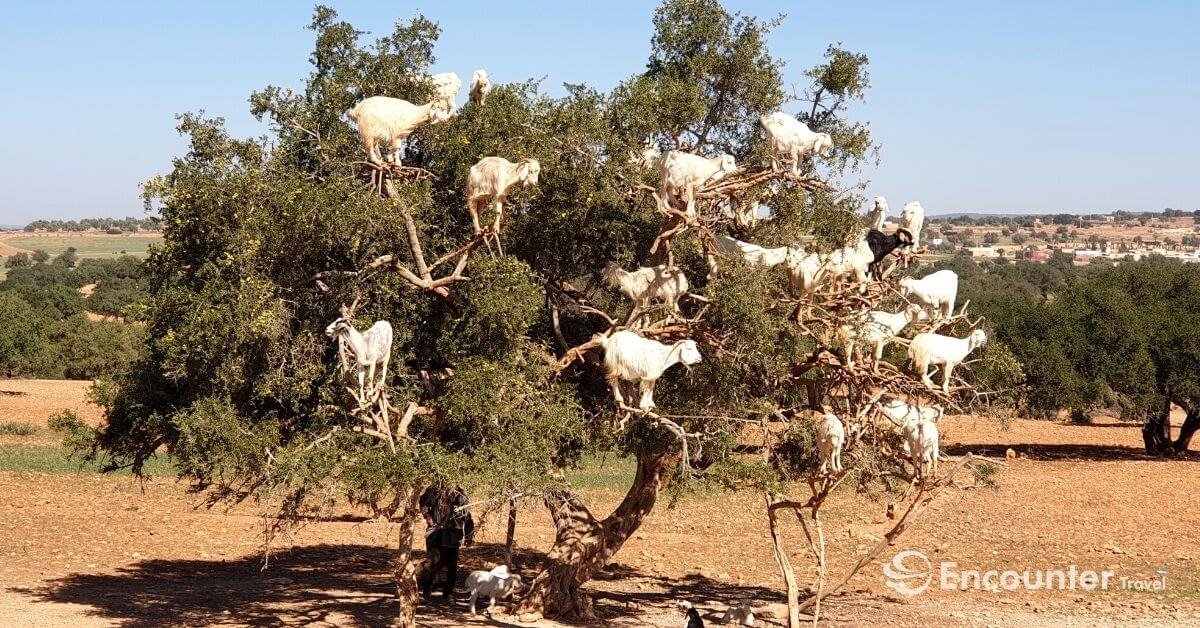
Goats climbing to get the fruit of an argan tree, Morocco.
I suspect they climbed better than most theropods (certainly better than ornithomimids with their tiny toes). But their arms are fairly short and spindly. One can see them clambering into branches like goats (which climb trees to get at argan fruit). But their anatomy makes it seem unlikely they were arboreal in the way that monkeys and chimps are, or that a 300 kg Anzu- the size of a female Kodiak bear- is getting far out onto the branches of a tree searching for fruit.
3. Not Enough Fruit
Third, when and where we find caenagnathids, the associated flora makes it unlikely caenagnathids could have fed primarily on fruit.
At least three caenagnathids are present in the Late Campanian Dinosaur Park Formation— Caenagnathus collinsi, Chirostenotes pergracilis, and Citipes elegans. The flora however is dominated by conifers, not angiosperms.

Dawn redwood (Metasequoia), mature cones.

Bald cypress, immature cones
Of the trees, bald cypress, dawn redwoods and pines produce cones. Podocarps make small fruit, which seem unlikely to provide enough sustenance for a 100 kg Caenagnathus.
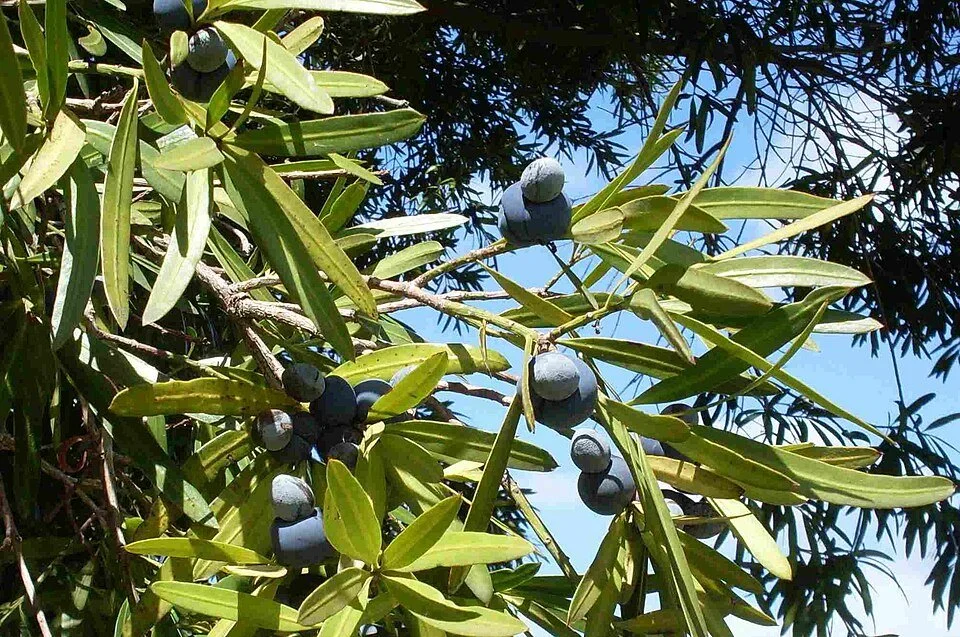
Fruit of a podocarp conifer
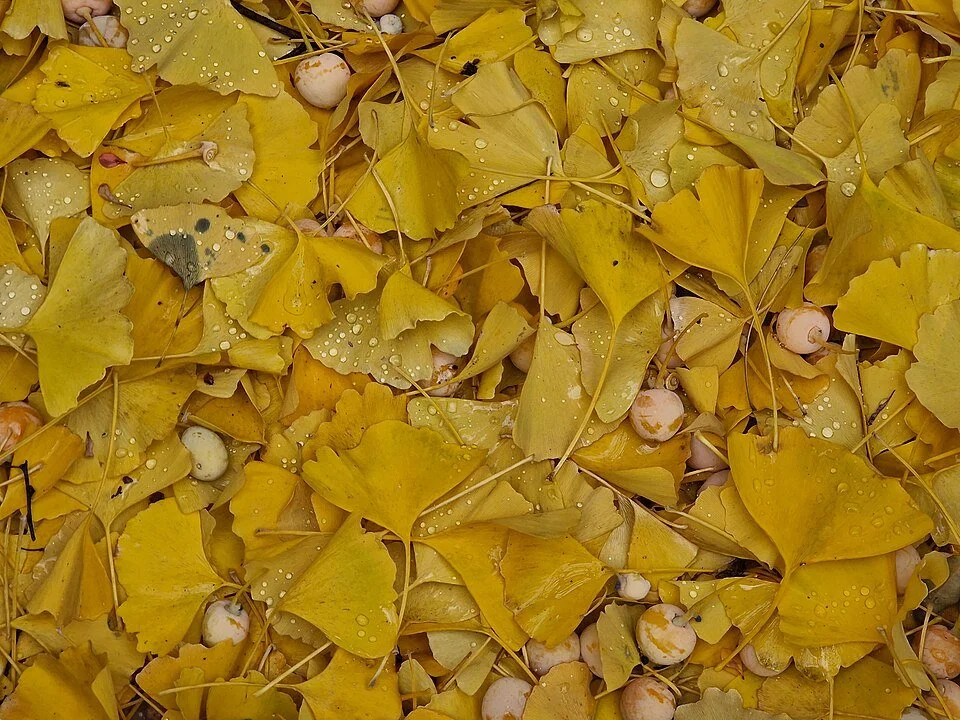
Ginkgos make large berries, but they are uncommon members of the Dinosaur Park flora.
Plane trees (Platanaceae) have small, wind-dispersed seeds.
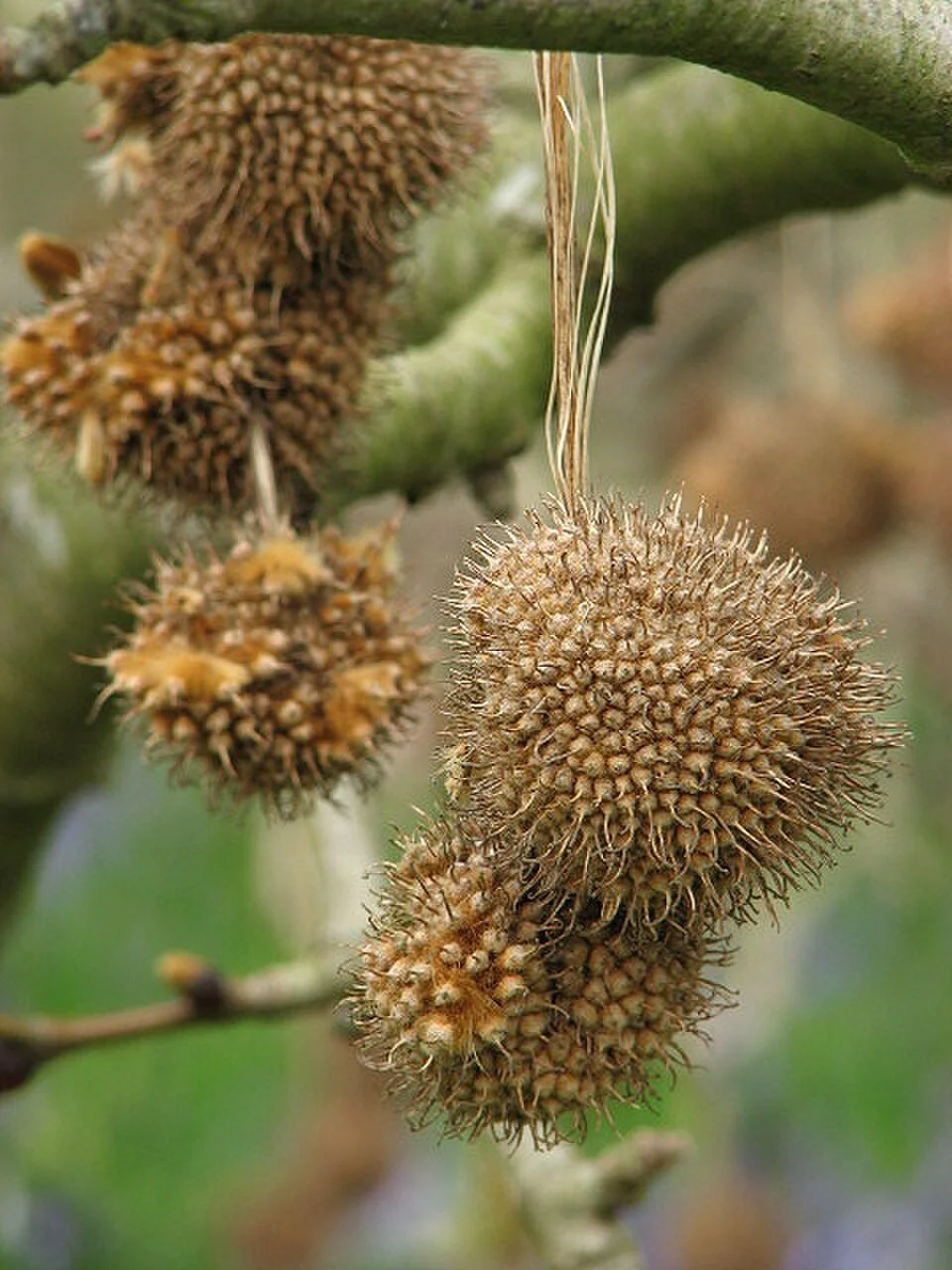
Fruit of a plane-tree (Platanus)
There are members of the Vitaceae (grapes) and Moraceae (figs) but again it’s the conifers that dominate, not the flowering plants. So there were fruits, and doubtless dinosaurs ate them. Fruits evolved for animals to eat them. Some trees produced a lot of fruit: ginkgos can cover the ground.
But the flora seems unlikely to consistently produce enough fruit to support large frugivore- let alone multiple species of large, terrestrial fruit specialists exist. A cassowary needs maybe 10 pounds of fruit a day. An orangutang, maybe 20 pounds a day(!). A gibbon might eat a couple pounds of fruit a day. Consistently finding two pounds of fruit a day (for a small Citipes) or 10-20 pounds (for a big Caenagnathus) seems like a stretch in a conifer-dominated flora.
The flora of the Horseshoe Canyon Formation, which has produced Epichirostenotes curriei and Apatoraptor is likewise dominated conifers, cycads, plane-trees and soforth, probably even less fruit than the Dinosaur Park Formation..
The Hell Creek is later in time, and so has a much higher diversity of angiosperms. The question is whether they were the kinds of angiosperms that produced fruit. There are more angiosperm trees, but plane trees and metasequoia are still common. The most common large fruit, Spinifructus, a palm fruit, has a woody exocarp, not a fleshy one.
We don’t really know a lot about the fruit of the Hell Creek, but neither do we have any particular reason to believe it had a diverse, abundant, and large fruit of the sort we see in, say, Papua New Guinea or northeastern Australia where cassowaries lived. To infer frugivory, it seems important to establish that fruit were large, diverse, and abundant in this habitat. We can’t do that.
The Nemegt Formation of Mongolia (which has produced Elmisaurus rarus) represents an endorheic basin- a river flowing into a desert, like the Okovango Delta in the Kalahari. The flora here include araucarias, cypresses, plane-trees, hornbeam, cycads, ginkgos, sedges, reeds, grasses, pondweeds, water lotus, and duckweeds. Not much in the way of fruit.
We do actually have a flora with a lot of fruit in the Late Campanian of New Mexico, in the McRae Formation. But we don’t actually have much in the way of oviraptorosaurs from the Late Campanian of New Mexico. And we can’t show that this diverse flora extended north into the Dinosaur Park or Hell Creek Formations. Overall it’s sorta the exception that proves the rule: there were floras that approached those of Cenozoic flora in terms of seed/fruit size, but they were rare; the average Cretaceous flora had much smaller fruit.
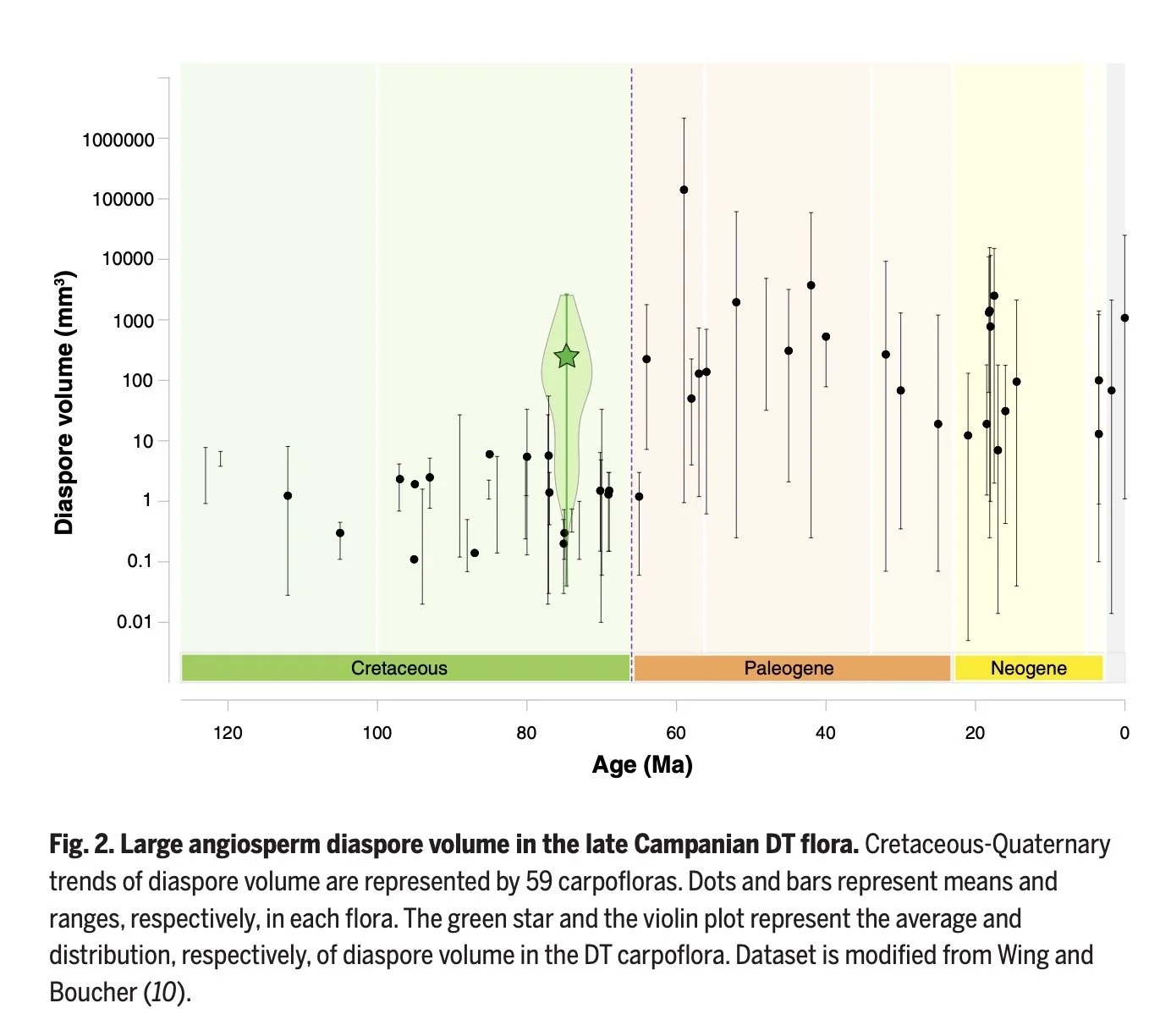
It’s not simply that we lack fossil evidence, what evidence we do have shows that The Cretaceous wasn’t the best time to be a frugivore. Plant seeds get much larger in the Paleocene and Eocene- your typical Paleogene site has seeds/fruits 1-2 orders of magnitude larger than your average Cretaceous site. This is when animal dispersal really seems to take off, and it’s after this point that frugivorous primates and birds really radiate..
4. Climate
Another thing that you may have noticed about fruit-eaters- toucans, hornbills, frugivorous parrots, monkeys, apes- is that they’re primarily tropical. That’s because large fruit- bananas, mangos, figs, passionfruit, breadfruit, durians, and so on- are primarily tropical, and achieve maximum abundance and diversity in tropical forests. The environments inhabited by many caenagnathids however were relatively high-latitude, seasonal environments very unlike those inhabited by modern frugivorous birds, fruit bats, and primates.
That’s because in the tropics, it’s warm and there’s relatively long days and intense sunlight year-round. That means trees can photosynthesize and produce fruit year round.
But in seasonal, higher-latitude environments, light levels and temperatures fluctuate seasonally. In summer, when its warm and there are long days, plants can grow rapidly, they produce large crops of fruit- that’s why we get plums in the summer, grapes and apples in the fall. Then the days get shorter, temperatures drop, growth ceases or slows, and plants go into dormancy. No more fruit. As you get further north, it becomes increasingly difficult to grow fruit: move north from France and Italy you leave wine country and enter cider country, and when you go far enough north even apples are difficult, and you’re reduced to fermenting potatoes for vodka, wheat and rye for whiskey and beer.
Most caenagnathids are known from relatively high-latitude, seasonal environments.
Late Cretaceous greenhouse climates did mean these environments were warmer. Subtropical conditions could extend into mid-latitudes, and so we see alligators and turtles thriving in Canada in the Cretaceous. Winters were milder too. But while it was a lot warmer, it was never the less highly seasonal- higher C02 levels don’t change the amount of daylight you get at high latitudes.
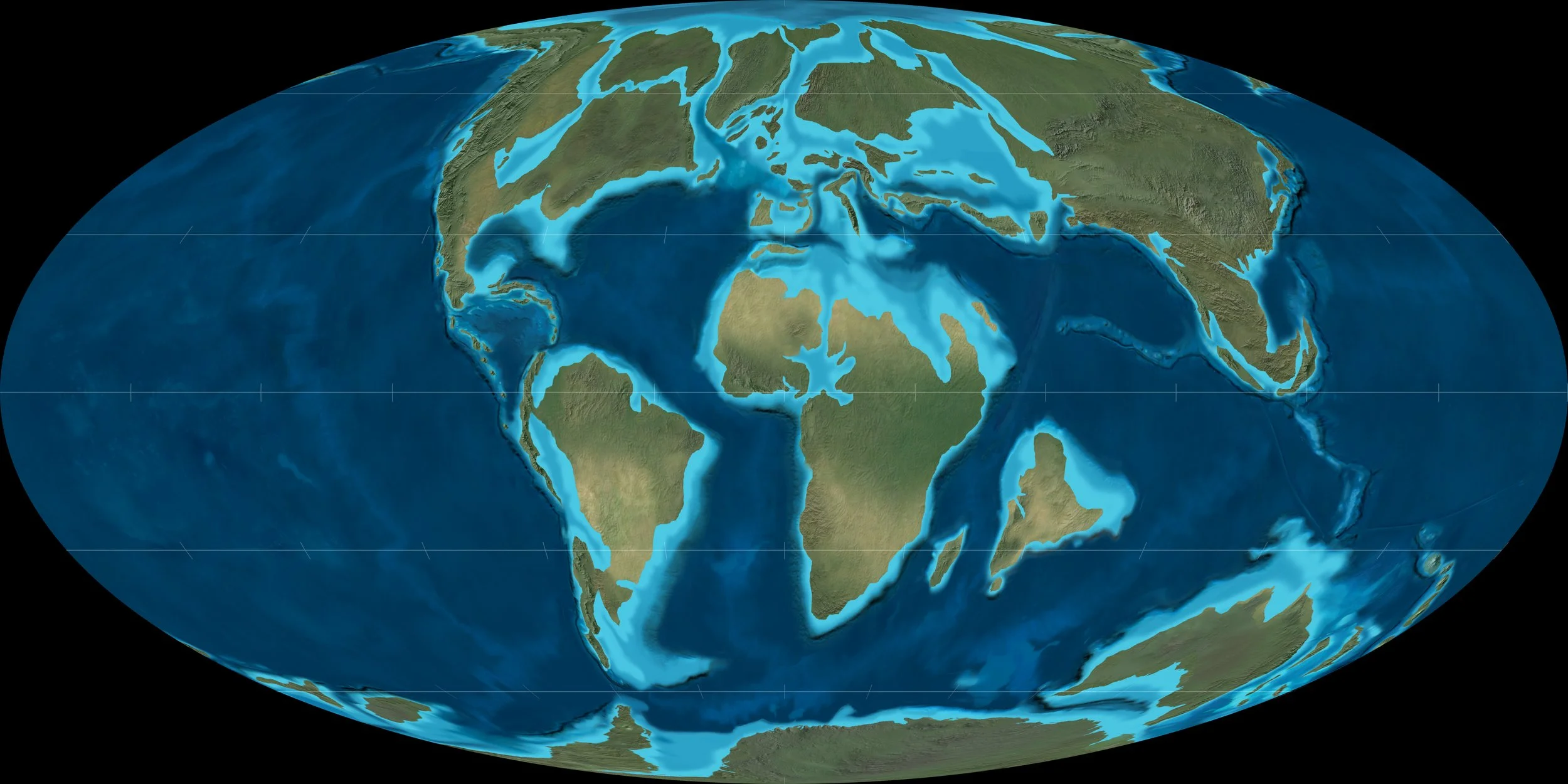
That’s because North America, which today is mostly in mid-to-high latitudes, actually lay slightly further to the north than it does today. So while higher C02 levels warm things up, latitudinal effects actually increase the day-length variation and annual changes in light levels relative to today.
The Dinosaur Park Formation is thought to have lain at 57 degrees north, the same latitude as modern day Scotland or southeast Alaska;
The Horseshoe Canyon Formation is a bit north of that;
The Hell Creek Formation likely lay at around 52 degrees north, about the same latitude as modern Calgary, or even further north, depending on the paleogeographic reconstruction;
In Asia, the Nemegt Formation in the Gobi, which produced Elmisaurus, was at about 41 degrees- the same latitude as Omaha, Nebraska.
So even if winters weren’t as cold, these mid- and-high latitude environments still saw huge fluctuations in day length and the intensity of sunlight. C02 and warm-water currents can warm things up; they can’t change the length of the day or the angle of sunlight in December at 57 degrees north. That’s just a function of orbital mechanics and Earth’s axial tilt.
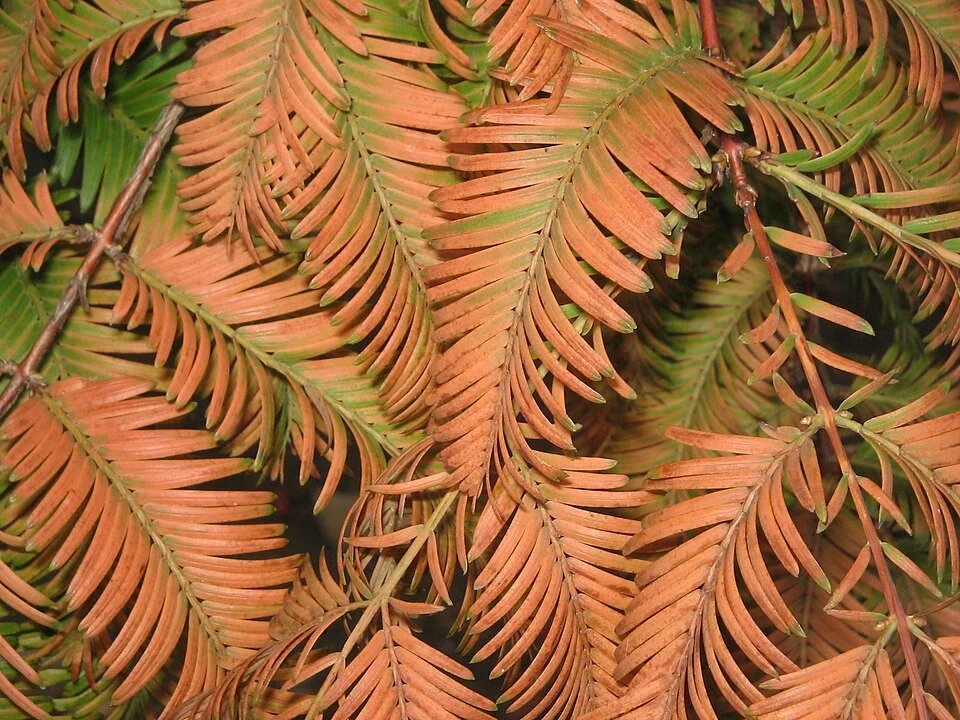
Metasequoia leaves turn red in the fall.
The extreme seasonality of these environments is seen in the flora, which is contains a high diversity of deciduous species such as bald cypress, dawn redwoods, ginkgos, and plane trees. These trees are all adapted to shed their leaves in the fall, to shut down photosynthesis and save energy, and then they start growing again in the spring. They weren’t putting out fruit during these long winters. There was nothing for a fruit-eater to eat until spring.
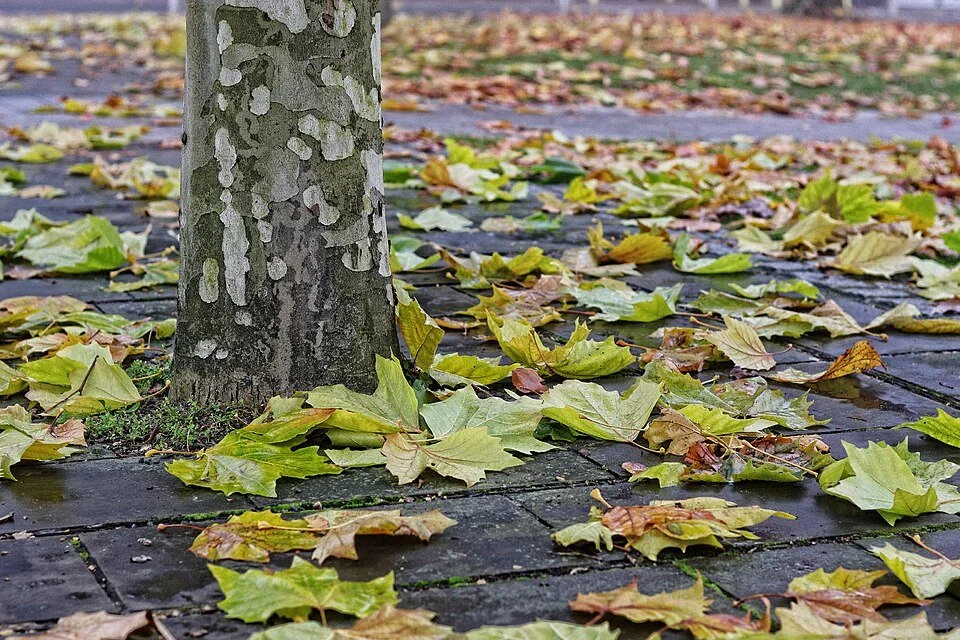
Fallen leaves of plane tree, another family common in the Dinosaur Park and Hell Creek formations
Photosynthesis would have been reduced or shut down for much of the year. Fruit would necessarily have been available seasonally. These environments seem unlikely to support a fruit-specialists year round.
That’s not to say there was no fruit in the summer, or that dinosaurs didn’t eat it. Something ate those ginkgo berries and podocarp fruits.
But these environments were not producing large amounts of large fruit, year-round, like you do in the rainforests of Africa, Borneo, the Amazon or Papua New Guinea.
The flora of Cretaceous Canada and North Dakota are unlikely to supported specialist fruit-eaters.
5.Comparative anatomy and functional morphology
Last, there’s the issue of the anatomy. What modern animals do caenagnathids most resemble? The problem is they aren’t perfectly convergent on any known animal, because evolution never really repeats itself. Still, we can look at the features of the anatomy and see what kinds of animals they occur in.
• The long, deep, U-shaped mandibular sympysis is typical of parrots, dicynodonts, tortoises and other turtles;
• the long triturating shelves of the dentary are typical of dicynodonts and turtles;
• the specialized jaw articulation— convex rather than concave, with a semicircular ridge oriented anteroposteriorly— is shared with dicynodonts
• the bluntly rounded upper beak, with its tooth-like projections, is shared with turtles, hadrosaurs, and (curiously) the extinct Hawaiian flightless duck Thambetochen.
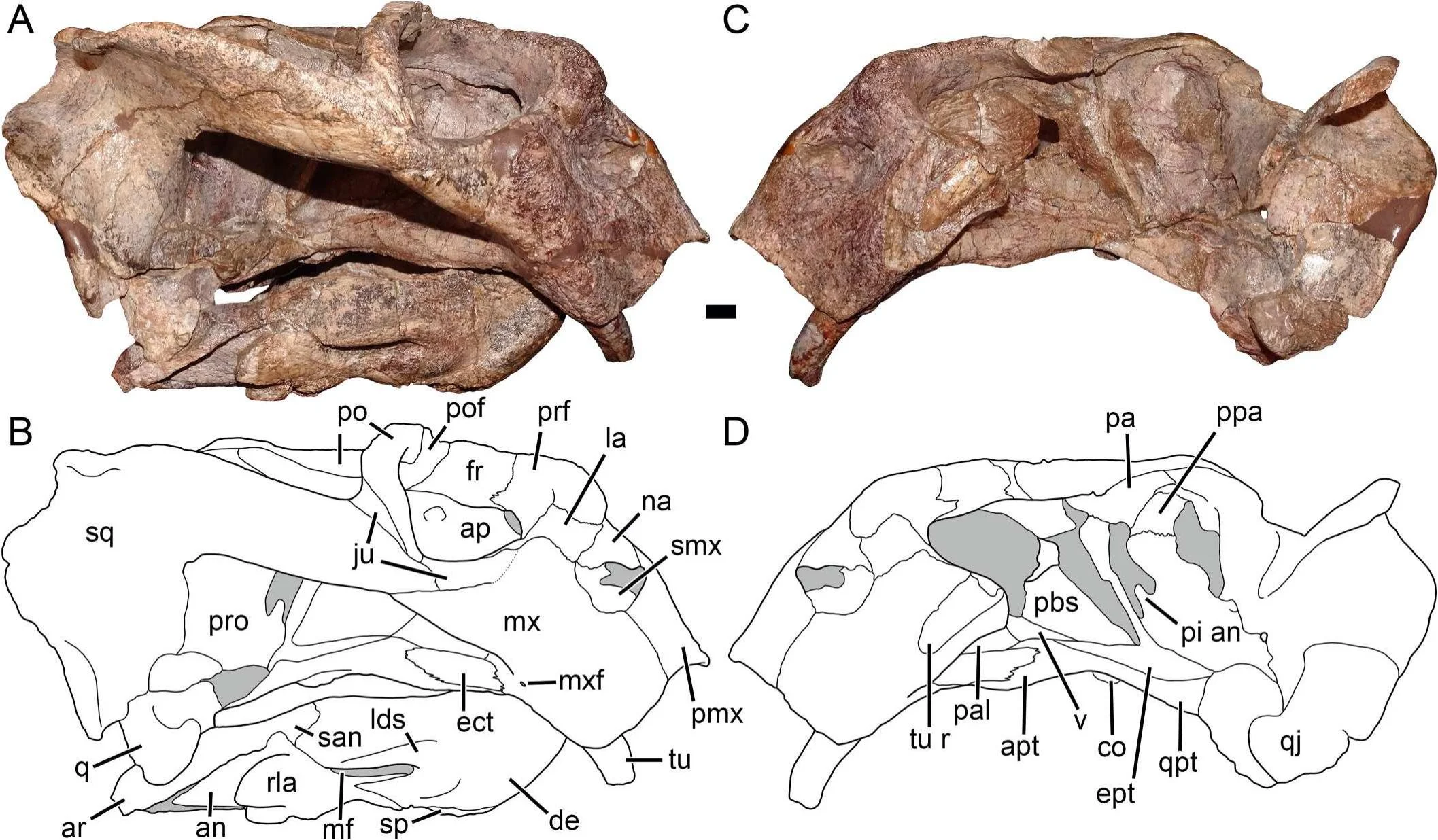
Skull of a lystrosaurid dicynodont. Note the overall similarity in skull shape to caenagnathids, as well as the similarity of the short, deep, edentulous lower jaw.
Overall the features that make caenagnathids so unusual tend to be found in herbivores and to a degree omnivores- dicynodonts, tortoises and turtles, parrots, the moa-nalo Thambetochen. And of course, the other groups of animals that show all these things are oviraptorids, avimimids, and other oviraptorosaurs- which are widely thought to be herbivorous. Probably the best single match in morphology is the dicynodonts, as Cracraft (1971) argues.
My sense is that overall this is an herbivore morphology, that caenagnathids got the bulk of their calories from plants. Still the ability to generate large bite forces and shear food probably would have allowed caenagnathids to eat a lot of stuff- plants, but also seeds, small vertebrates (mammals, lizards, baby dinosaurs). And fruit. And in the same way the specialist parrot skull is used for everything from kea-style omnivory, to kakapo-style herbivory, to parakeet-style granivory, to frugivory, the caenagnathid jaw morphology could probably be repurposed for a number of different things. I suspect most species of caenagnathid were mostly herbivorous, but it was a diverse, long-lived group with a lot of variation in jaw shape and jaw size, a minor adaptive radiation. They can’t all be doing the exact same thing.
The Infernogallus paper argues that the loos of a gastric mill (gizzard with gastrolith) in caenagnathids suggests “high-fiber herbivory is unlikely in caenagnathids”. However, gastric mills are absent in many herbivorous dinosaurs- leptoceratopsids, protoceratopsids, and ceratopsids… even duckbills. But ceratopsids and duckbills, with massive batteries of shearing and grinding teeth (respectively) are the ultimate high-fiber herbivores. It seems far more likely that the oral processing of caenagnathids- shearing using those triturating ridges- meant they didn’t need a gizzard to process their food.
In terms of the bite force, the paper argues the bite force in Infernogallus was reduced, but this argument seems unconvincing for several reasons. First, saying that the bite force is reduced relative to Oviraptoridae isn’t saying much. It’s like saying a German shepherd has a weak bite compared to a pit bull.
Oviraptoridae have among the most extreme morphologies in Theropoda, they’re specialized for very forceful bites. Caenagnathines, with more slender mandibles, had weaker bites than oviraptorids- but their jaws were much more robust than those of ornithomimids, therizinosaurs, avimimids, caudipterix, or many modern herbivorous birds like moas, rheas, and emus. They also have an anteriorly displaced coronoid process, which gives the jaws tremendous mechanical advantage when closing: they are designed for forceful bites. To a lesser degree than in Oviraptoridae or the basal caenagnathid Gigantoraptor, yes. But even a slender-jawed caenagnathine like Caenagnathus or Anzu has a more robust jaw than most herbivorous ratites, ornithomimosaurs, or therizinosaurs.
Second, the paper argues that muscle volume was reduced- but muscle length primarily affects the speed and distance of muscle contraction, rather it’s muscle cross-sectional area — that determines. The supratemporal fenestrae, to which the jaw adductors attached, are still large- similar in size to oviraptorids, and much larger than in ostrich dinosaurs, therizinosaurs, or basal oviraptorosaurs like avimimids, caudipterygids. The argument that these animals- with large jaw adductors and robust jaws- were restricted to soft foods doesn’t add up in my mind.
Conclusions
A number of different lines of evidence make it unlikely that caenagnathids were frugivores.
Most frugivores tend to be small and arboreal, caenagnathids were big and terrestrial. A few, like Gigantoraptor, were enormous.
Frugivores live where there’s tons of fruit (literally, a cassowary has to eat hundreds of pounds of fruit a month). Caenagnathids were abundant and diverse in conifer-dominated assemblages.
Frugivores live where fruit is available year-round. Caenagnathids inhabited mid-to-high environments that were highly seasonal, which would have seen massive seasonal shifts in fruit availability.
Most features of their anatomy, meanwhile, are consistent with herbivory or omnivory; the robust jaws and large temporal muscles indicate high bite forces compared to other theropods. It’s also worth noting that caenagnathids were diverse. They varied hugely in size, jaw proportions, habitats and the associated flora. They clearly didn’t all do the same thing. Some probably ate tougher plants, some softer; they may have consumed small vertebrates to varying degrees
But there seems little evidence they were fruit-eaters.
Is it impossible that these animals were specialist frugivores? No, but there’s not a lot of evidence to say they were, either. That could change, but I think it would require strong evidence that there were abundant large fruits in the associated flora, or gut contents. As things stand, a handful of anatomical characters are used to claim they functioned like a much smaller parrot- a species which differs markedly in its jaw shape (hooked beak) and skull function (kinetic upper jaw).
I’m not saying that no theropods ate fruit ever.
Something ate ginkgo berries and podocarp fruit and figs after all. In the Cerro Del Pueblo Formation in the Late Campanian in Mexico; we have berries of an extinct angiosperm lineage, and tiny Musaceae(bananas). Doubtless dinosaurs- ornithomimids, troodontids, dromaeosaurines, caenagnathids, little duckbills- ate them if they could get them. Who knows, maybe small tyrannosaurs ate berries, bears and canids will eat a lot of fruit, so do some raptors. It’s worth thinking about what these fruits evolved to be dispersed by- because they weren’t being eaten by toucans and monkeys.
But in the absence of large fossil fruit, or gut contents, and in the context of conifer-dominated assemblages in places like Dinosaur Park, it seems like a large leap to go from “dinosaurs ate fruit”, to arguing that the bulk of the caenagnathid diet was fruit. I’m not saying it’s impossible. I think you just need a lot more evidence before you can claim this with any confidence. Better evidence for large fruit in these formations, gut contents.
As it stands, it’s speculative.
As the saying goes, “extraordinary claims require extraordinary evidence.”
Frugivory in and of itself isn’t extraordinary, certainly not in an “Aliens-built-the-pyramids kind of way. But the hypothesis of frugivorous caenagnathids is extraordinary (literally, out of the ordinary) in the sense it would be highly unusual for multiple taxa of large, terrestrial frugivore to inhabit high-latitude, seasonal, conifer dominated ecosystems in the Late Cretaceous, prior to the main diversification of angiosperm fruit in the Paleogene.
Of course, paleobiology demands a lot of speculation. How can we confidently infer the diet, behavior, and ecology of animals that died 66 million years ago? Often the best we can do is make educated guesses. Still, some guesses are more likely than others, and it’s important to differentiate between speculation and where the evidence lets us draw robust conclusions.
What I’d argue is that the way to approach paleobiology is by looking at the big picture- many different lines of evidence- rather than getting overly fixated on any single aspect of the biomechanics or comparative anatomy. It’s easy to look at all the features of a skeleton and find one or two pieces of evidence that fit a particular functional hypothesis. Accurate inference of fossil behavior depends on trying to integrate many different lines of evidence; testing the hypothesis against all possible lines of evidence.
How big is the animal? Body mass determines a lot. How much you need to eat. What you can eat. What can eat you. Locomotor strategy- whether you can run, climb, or fly. It determines how long your life cycle takes to play out. Body size matters enormously in paleobiology. It’s one of the most powerful signals we have of an animal’s biology, and so one of the first places to start when testing hypotheses of function.
How do you move? Locomotor strategy determines a lot about what kinds of lifestyle are viable, or not.
Where do you live? This is important in terms of climate- mean annual temperatures, seasonality, rainfall. It’s also important because what’s around you determines what’s available to eat, what eats you, and soforth.
When do you live? Where you exist in time determines what kinds of species you can potentially interact with.
What are the functional correlates of various anatomical characters? Evolution never repeats, no animal is ever a perfect model for any other animal. Ichthyosaurs aren’t dolphins, swordfish, or sharks. But they do have a lot of features that are seen in dolphins, swordfish, and sharks, which allows us to infer they were fast, efficient swimmers. In the same way, rather than fixating on a single species as a model, it’s probably useful to look at the entire suite of characters seen in the animal of interest, and try to figure what behaviors each character best correlates with.
Curiouslly, if we apply this framework there are Cretaceous animals where it’s highly plausible to infer frugivory- the marsupial Glasbius from the Late Maastrichtian of the Hell Creek, for example (small, being marsupial, likely arboreal; teeth resemble those of frugivorous mammals).
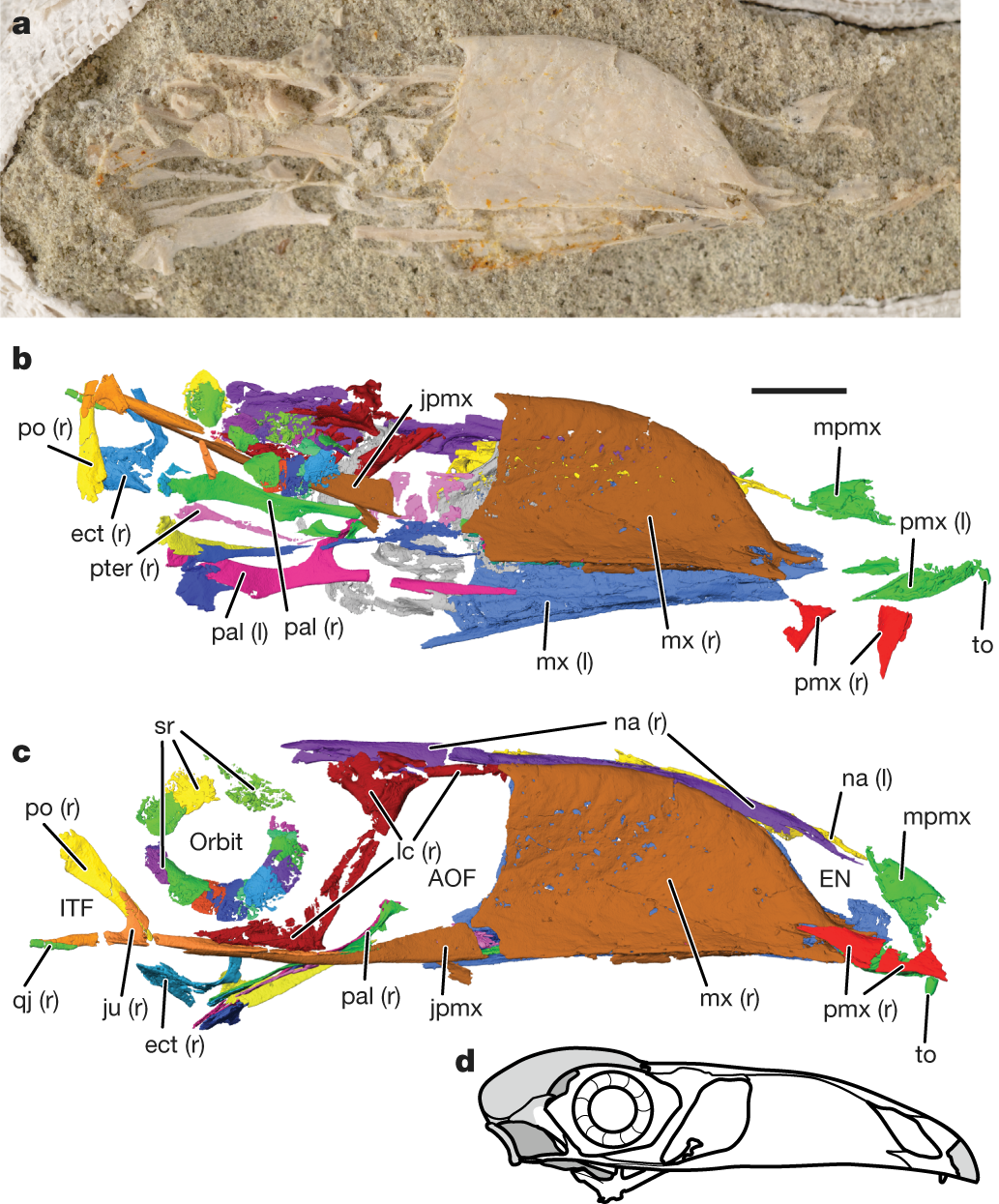
And then there’s the odd toucan-beaked enantiornithine Falcatakely from Madagascar (small, can fly, beak resembles frugivorous toucans and hornbills, lived in the tropics). It’s a little strange nobody has argued this. Because yes, it is speculative, but it’s a speculation that fits remarkably well with the animal’s anatomy. We unfortunately know little about the flora of ancient Madagascar, but being near the equator it was tropical- so it’s reasonable to guess there could have been a lot of fruit, available more or less year-round.
So we can make plausible arguments for frugivory in some Cretaceous taxa; it’s speculative but a reasonable inference. Just probably not for caenagnathids.
I think it’s easy to go down a rabbithole in science- spending a huge amount of time exploring the fine details of anatomy, or computer models, or biomechanics. And these things obviously do matter and need to be taken into account.
But sometimes it’s the obvious stuff that matters- how big an animal is, its build, its habitat, the flora, the passing of the seasons… things that are simple observations to make, but which carry enormous weight in understanding these animals. Context matters. These details aren’t decisive but taken together they can shift the weight of evidence towards or away from a particular hypothesis.
It’s perhaps more like being a naturalist than a scientist, but this naturalistic understanding is really important to understanding the past. The present is of course not a perfect model for the past. If it was, why would we need fossils?
But I also think it’s this grounding in the here and now, in nature, in all the diversity of life- that helps give us ideas about what’s impossible… and also, some of the truly strange things that are possible.
N
References
Cracraft, J., 1971. Caenagnathiformes: Cretaceous birds convergent in jaw mechanism to dicynodont reptiles. Journal of Paleontology 45, 805-809.
Currie, P.J., Godfrey, S.J., Nessov, L., 1993. New caenagnathid (Dinosauria: Theropoda) specimens from the Upper Cretaceous of North America and Asia. Canadian Journal of Earth Sciences 30, 2255-2272.
Currie, P.J., Russell, D.A., 1988. Osteology and relationships of Chirostenotes pergracilis (Saurischia, Theropoda) from the Judith River (Oldman) Formation of Canada. Canadian Journal of Earth Sciences 25, 972-986.
Funston, G.F., Currie, P.J., 2016. A new caenagnathid (Dinosauria: Oviraptorosauria) from the Horseshoe Canyon Formation of Alberta, Canada, and a reevaluation of the relationships of Caenagnathidae. Journal of Vertebrate Paleontology 36, e1160910.
Funston, G.F., Williamson, T.E., Brusatte, S.L., 2024. A caenagnathid tibia (Theropoda: Oviraptorosauria) from the upper Campanian Kirtland Formation of New Mexico. Cretaceous Research 158, 105856.
Funston, G.F., Dudgeon, T.W., Simon, D.J., Dufault, D.M., Boyd, C., Fowler, D., Currie, P.J., Evans, D.C., 2026. Fruit-eating adaptations in a Late Cretaceous oviraptorosaur (Theropoda). Nature Communications.
Johnson, K.R., 2002. Megaflora of the Hell Creek and lower Fort Union Formations in the western Dakotas: vegetational response to climate change, the Cretaceous-Tertiary boundary event, and rapid marine transgression. Geological Society of America Special Paper 361, 329-391.
Kielan-Jaworowska, Z., Cifelli, R.L., Luo, Z.-X., 2004. Mammals from the Age of Dinosaurs: Origins, Evolution and Structure. Columbia University Press, New York.
Koppelhus, E.B., 2005. Paleobotany, In: Currie, P.J., Koppelhus, E.B. (Eds.), Dinosaur provincial park: a spectacular ancient ecosystem revealed. Indiana University Press, Bloomington, pp. 131-138.
Lamanna, M.C., Sues, H.-D., Schachner, E.R., Lyson, T.R., 2014. A New Large-Bodied Oviraptorosaurian Theropod Dinosaur from the Latest Cretaceous of Western North America. PLoS ONE 9, e92022.
Longrich, N.R., Barnes, K., Clark, S., Millar, L., 2013. Caenagnathidae from the Upper Campanian Aguja Formation of West Texas, and a revision of the Caenagnathinae. Bulletin of the Peabody Museum of Natural History 54, 23-49.
Ma, W., Wang, J., Pittman, M., Tan, Q., Tan, L., Guo, B., Xu, X., 2017. Functional anatomy of a giant toothless mandible from a bird-like dinosaur: Gigantoraptor and the evolution of the oviraptorosaurian jaw. Scientific reports 7, 16247.
Wang, M., O’Connor, J.K., Pan, Y., Zhou, Z., 2017. A bizarre Early Cretaceous enantiornithine bird with unique crural feathers and an ornithuromorph plough-shaped pygostyle. Nature Communications 8, 1-12.
Sullivan, R.M., Jasinski, S., van Tomme, M.P.A., 2011. A new caenagnathid Ojoraptorsaurus boeri, n. gen., n. sp. (Dinosauria, Oviraptorosauria) from the Upper Cretaceous Ojo Alamo Formation (Naashoibito Member), San Juan Basin, New Mexico. New Mexico Museum of Natural History and Science Bulletin 53, 418-428.
West, C.K., Halbwidl, K., Seyfullah, L.J., Reichgelt, T., Greenwood, D.R., 2026. Fossil flora and palaeoclimate of the Upper Cretaceous Horseshoe Canyon Formation, Horsethief Member, at Morrin Bridge, Alberta, Canada. Fossil Imprint, 131–170-131–170.
Sues, H.D., 1997. On Chirostenotes, a Late Cretaceous oviraptorosaur (Dinosauria: Theropoda) from western North America. Journal of Vertebrate Paleontology 17, 698-716.
Xu, X., Tan, Q., Wang, J., Zhao, X., Tan, L., 2007. A gigantic bird-like dinosaur from the Late Cretaceous of China. Nature 447, 844-847.
Zanno, L.E., Sampson, S.D., 2005. A new oviraptorosaur (Theropoda, Maniraptora) from the Late Cretaceous (Campanian) of Utah. Journal of Vertebrate Paleontology 25, 897-904.